Engauge
Designing for
the decisions that happen before growth
More tools, less clarity
No business sets out to make itself harder to understand. It just happens — a new channel here, an attribution tool there, a CRM migration, a dashboard one team built that quietly became everyone's source of truth.
Each addition solves something in the moment. Together, they make the business progressively harder to reason about.
I took on Engauge to fix that at the root: a platform built around how data relates, not just how much of it gets collected.
Studying the investigation, not the dashboard
Before sketching a single screen, I spent time understanding how businesses actually investigate a problem.
That's not a linear process. It's investigative, and it should feel that way in the product. So instead of building reporting tools one at a time, I designed for the shape of the investigation itself.

That's not a linear process.
It's investigative, and it should feel that way in the product. So instead of building reporting tools one at a time, I designed for the shape of the investigation itself.

Letting one answer lead to the next question
A campaign outperforms expectations.
Why?
The data points to a segment
A behavioural pattern shows up.
I used that exact chain as the interaction model
Business performance
Customer behaviour
Deeper analysis
Without the user losing the thread of what they were originally trying to figure out.
Nothing resets between screens; context carries forward the way it would in someone's own head.

Context first, depth on request
The first layer of the product is deliberately broad
Marketing, acquisition, revenue and operational health, together — because no one reads those numbers in isolation in real life.

The job of this layer isn't to answer everything. It's to help someone spot where the real question is hiding.
From there, the product goes deep on request:
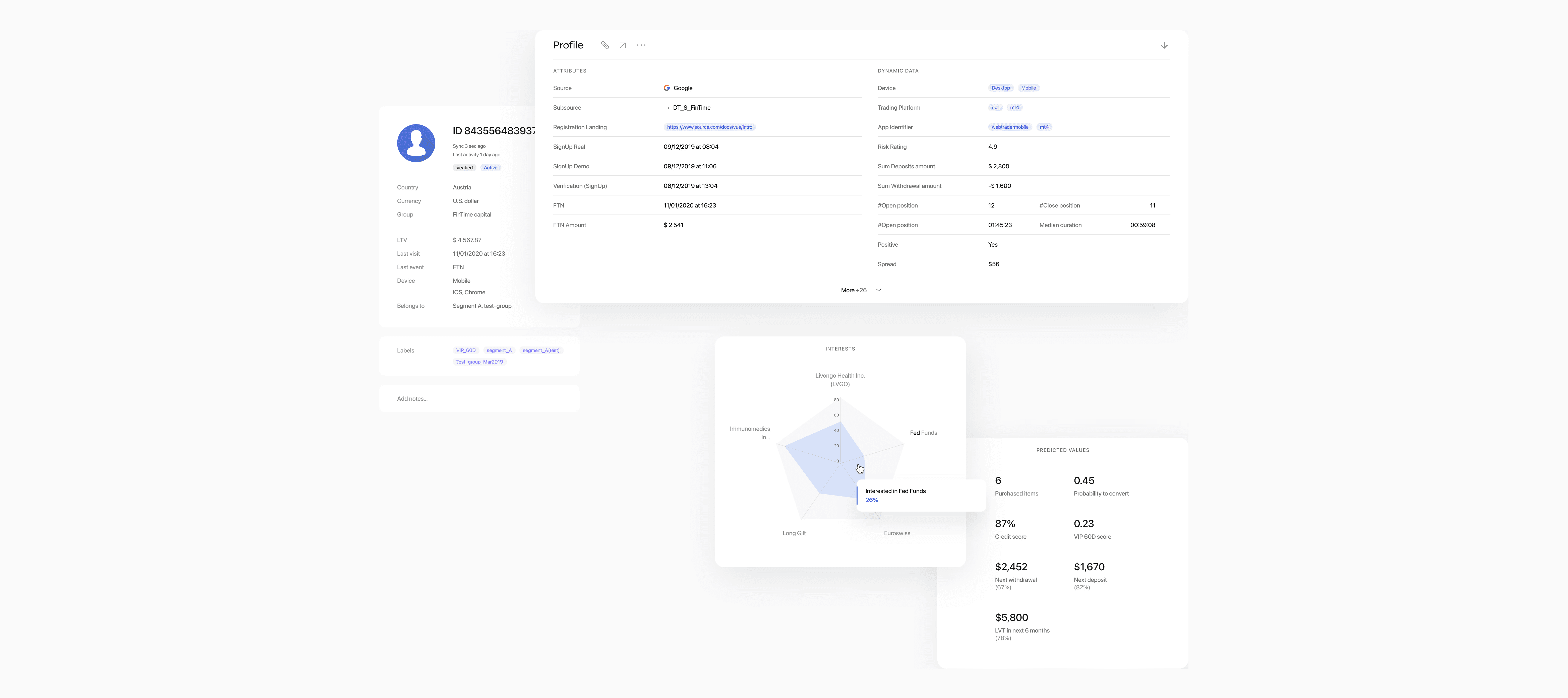
Segments explain behaviour,


Cohorts explain retention,


Journeys expose friction, lifetime value adds a longer horizon.
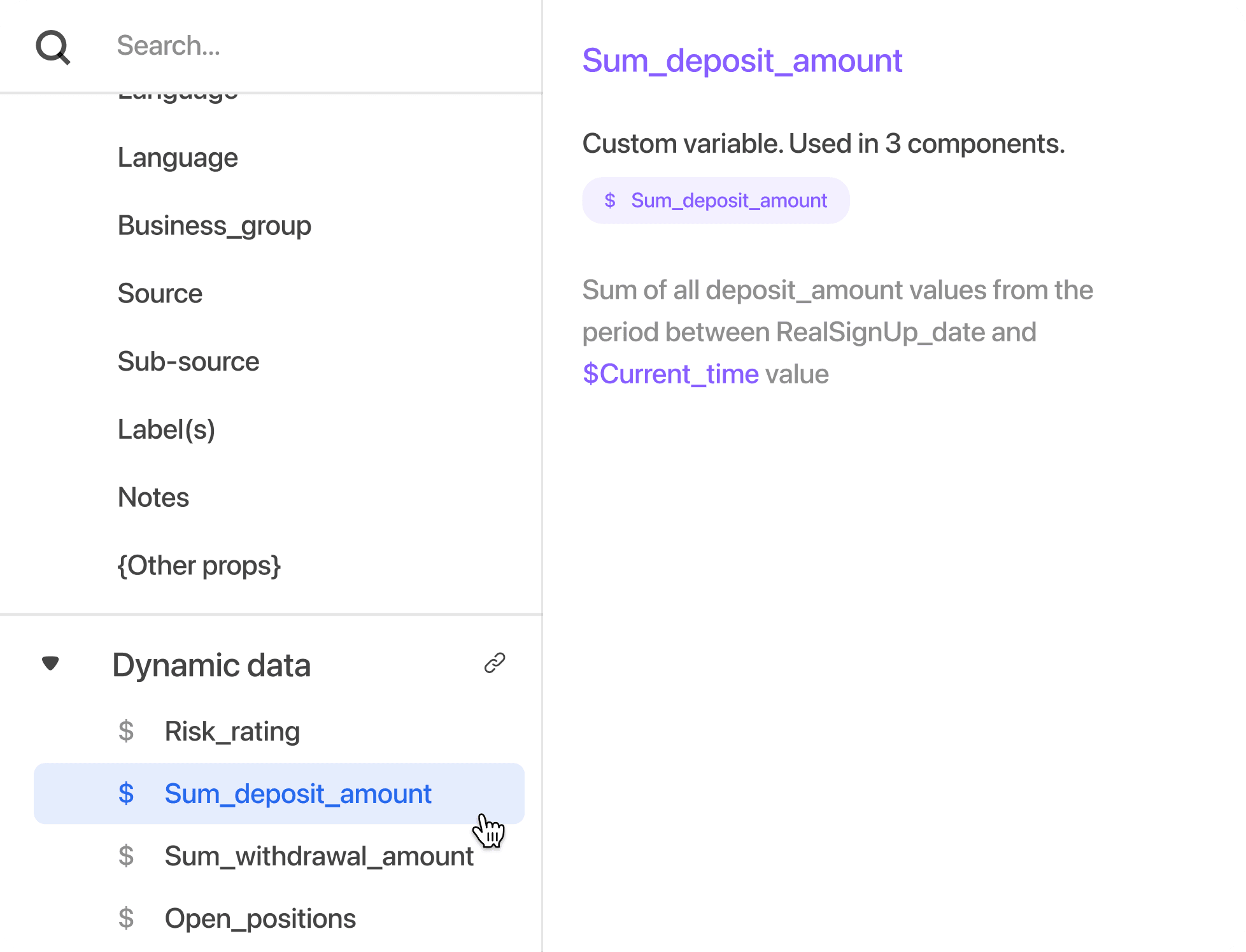

Hierarchy — not decoration — does the work of showing what matters first and what's available if you need it.
That progressive disclosure keeps a genuinely complex platform from feeling like one.

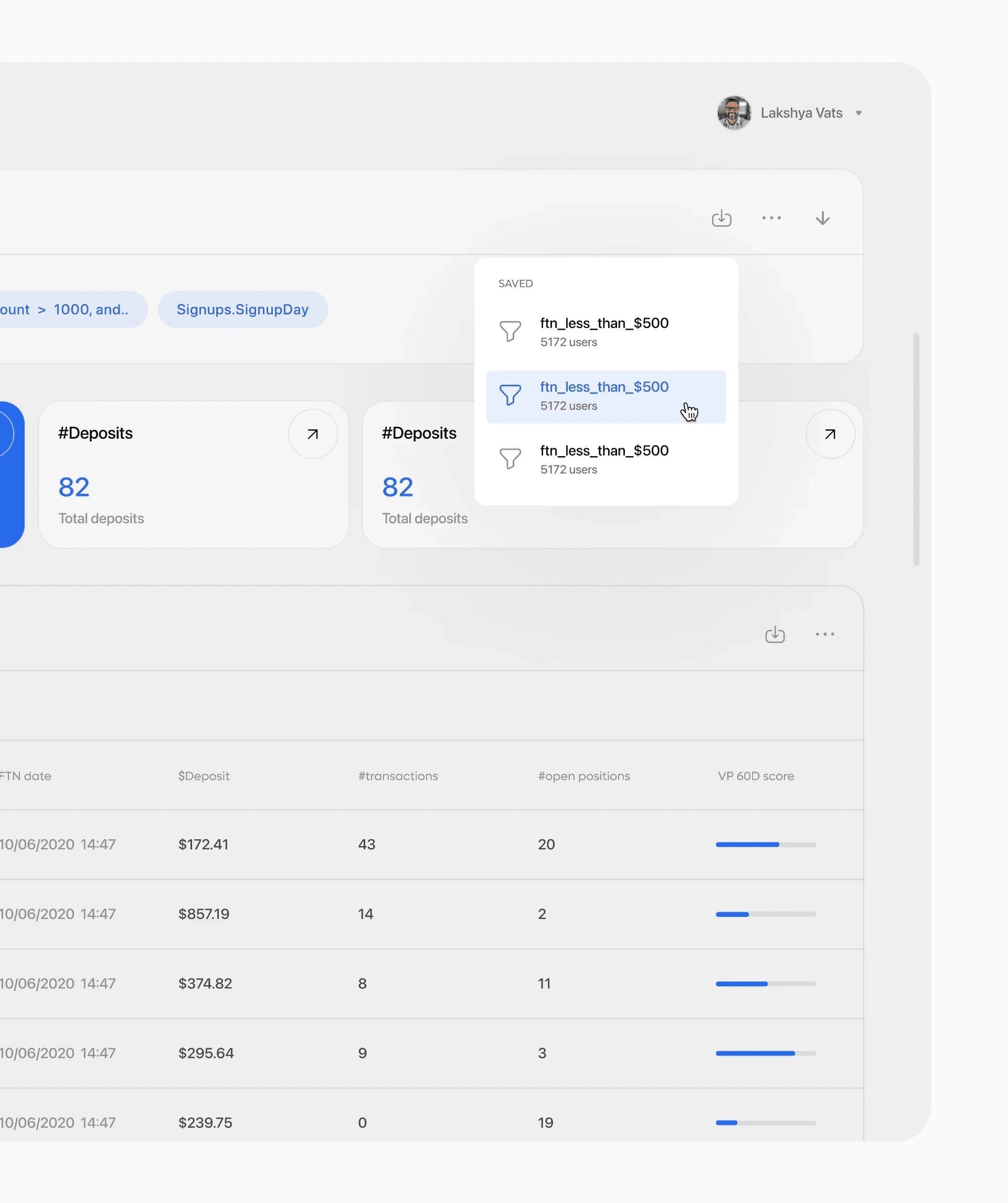

From reporting to response
Most reporting looks backward by design.
I wanted Engauge to help teams act on the present, so custom reports handle the questions unique to a business while automated insights run continuously in the background
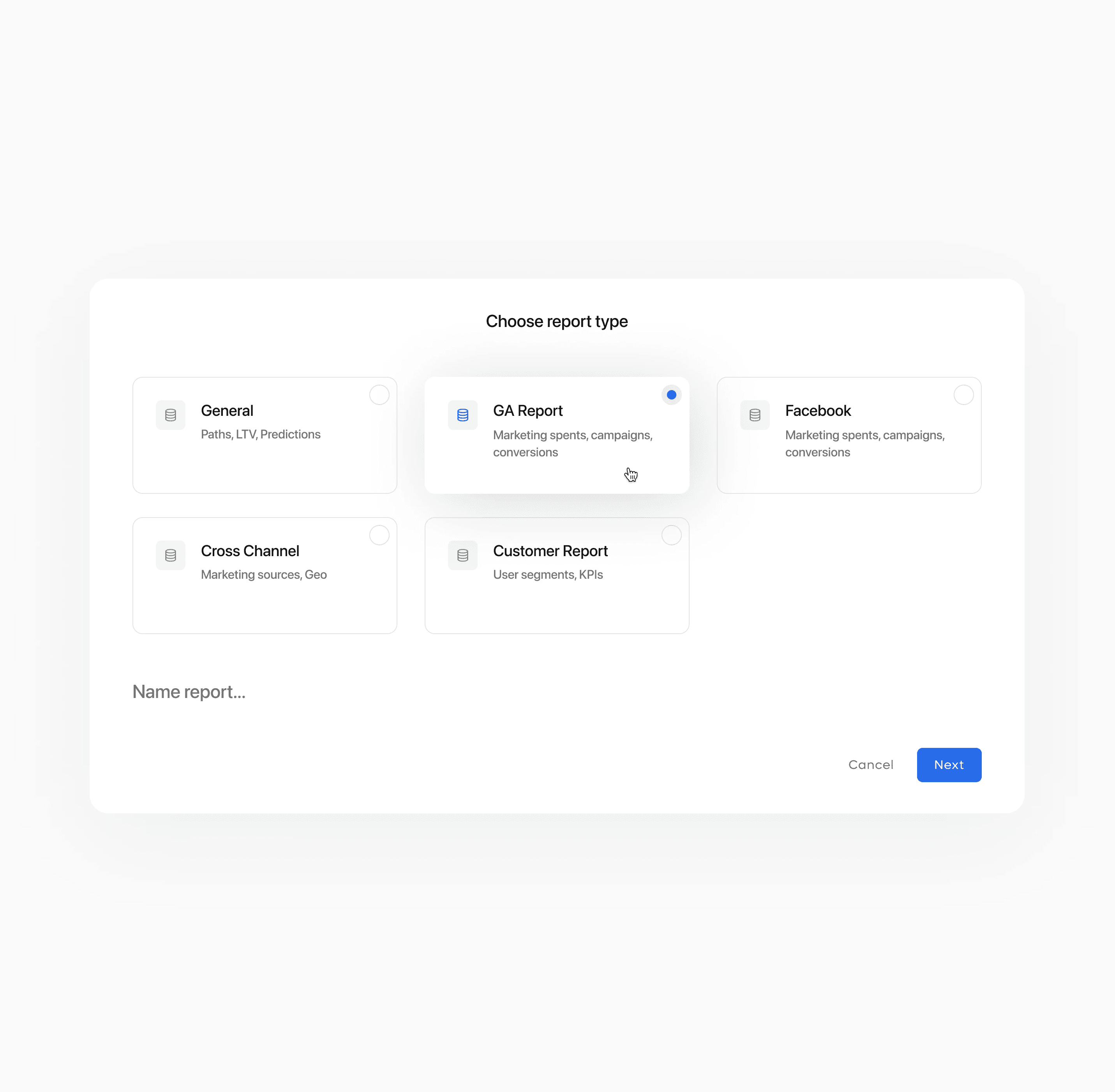



surfacing anomalies before anyone thinks to go looking. The product started asking questions, not just answering them.
act on insights
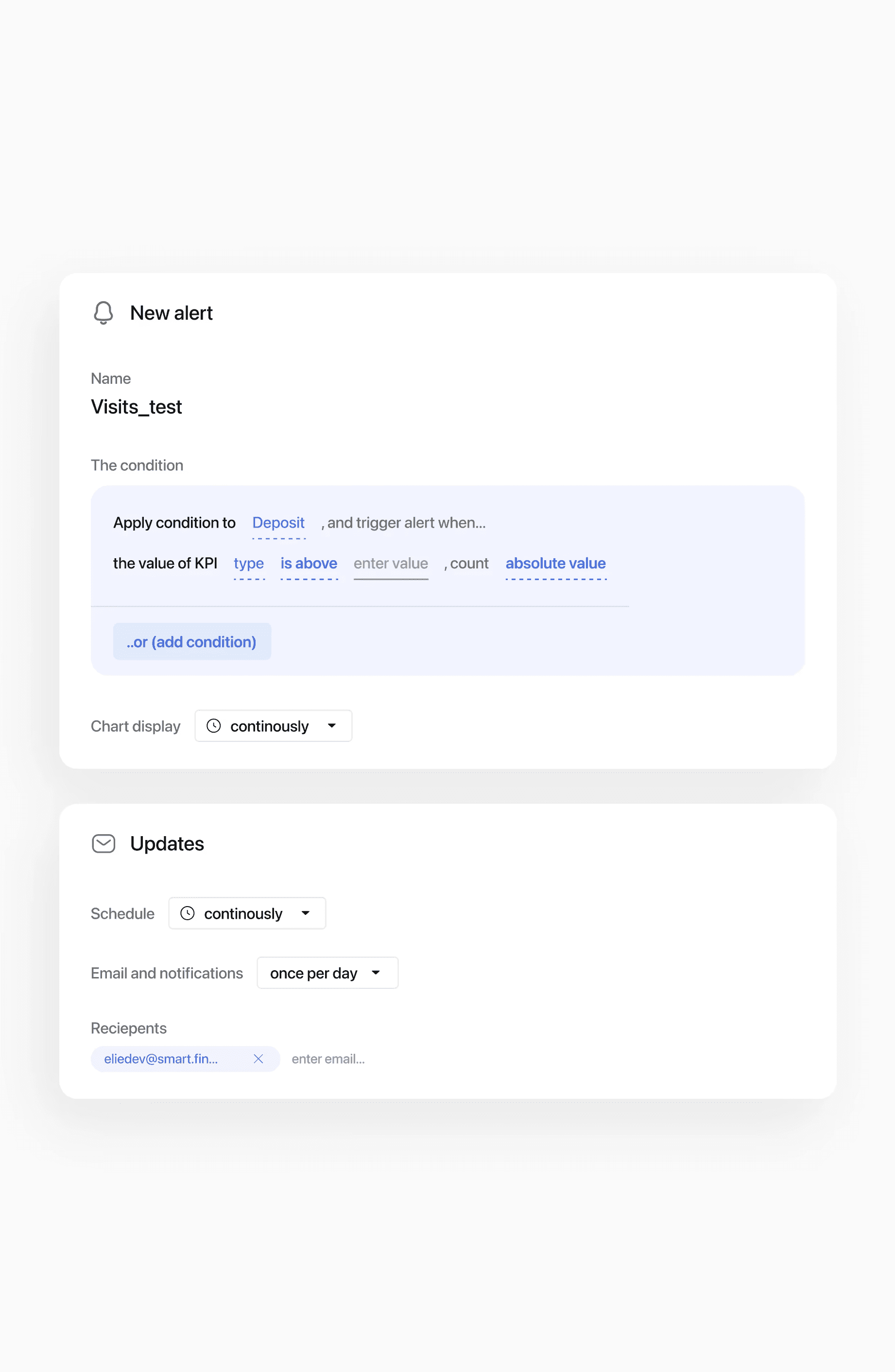
Rather than expecting users to continuously monitor dashboards, Engauge proactively surfaces important changes.
AI-generated insights highlight anomalies, campaign opportunities, declining performance, and customer behaviour shifts, while custom monitoring allows businesses to define important KPIs and receive alerts whenever significant changes occur.


reflections
Analytics gets described as a search for answers.
I've come to think it's closer to a search for better questions — and the job of the interface is to shorten the distance between curiosity and understanding, not just to visualise more of it.
Impact
Reframed a fragmented, feature-rich analytics product around one connected investigation, from business overview down to root cause.
Designed information architecture that serves technical and non-technical users on the same platform, without splitting it into two products.
Used hierarchy and progressive disclosure to keep a genuinely complex platform legible at every depth, from summary to segment-level detail.
Shipped AI-assisted monitoring that surfaces meaningful signals proactively, shifting reporting from backward-looking to responsive.

